Djibouti

false
lp-heading-top-xxlarge
lp-heading-bottom-xlarge
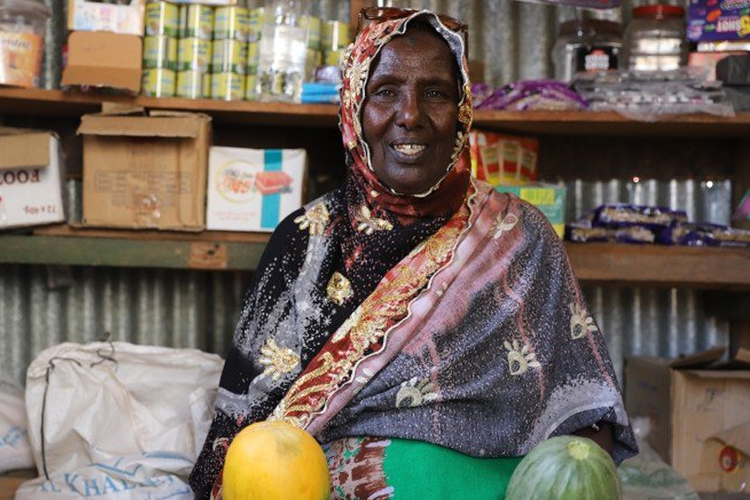
Women Driving Change in Rural Djibouti
Feature story
Women Driving Change in Rural Djibouti
https://www.worldbank.org/en/news/feature/2025/07/17/lighting-the-way-women-driving-change-in-rural-djibouti

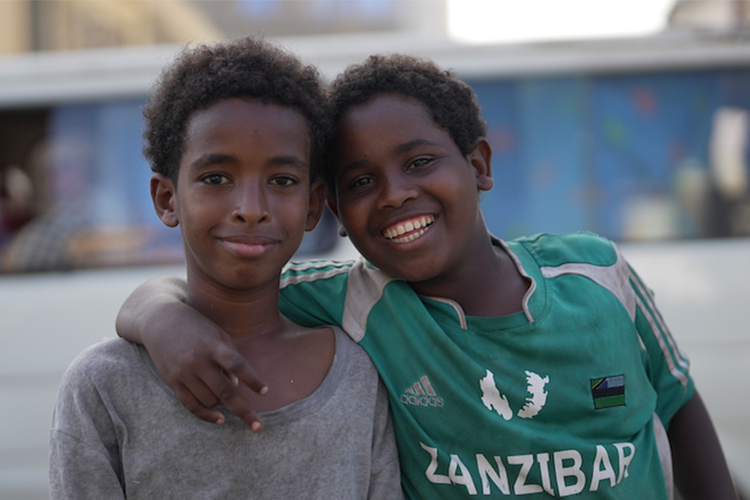
The Development Response to Displacement Impacts Project is improving the lives of displaced populations and host communities across Djibouti and empowering women.
Read More

Advancing Inclusion for Children with Disabilities in Djibouti
Press Release
Advancing Inclusion for Children with Disabilities in Djibouti
https://www.worldbank.org/en/news/press-release/2025/07/11/new-world-bank-project-to-support-children-with-disabilities-in-djibouti
Helping Djibouti Respond to Emergencies
Press Release
Helping Djibouti Respond to Emergencies
https://www.worldbank.org/en/news/press-release/2025/07/01/new-project-to-help-djibouti-respond-to-emergencies
DJI

BY THE NUMBERS: DJIBOUTI

Explore More Data
https://data360.worldbank.org/en/economy/DJI
Djibouti
Source
Dataset
Go to Data 360
Compare with benchmark region data
WB_WDI_BX_KLT_DINV_WD_GD_ZS
Foreign direct investment, net inflows (BoP, current US$)
line
WB_WDI_SI_POV_DDAY
Poverty headcount ratio at $3.00 a day (2021 PPP) (% of population)
line
WB_WDI_SL_TLF_CACT_FE_ZS
Labor force participation rate, female (% of female population ages 15+) (modeled ILO estimate)
line
WB_WDI_SE_ENR_PRIM_FM_ZS
School enrollment, primary and secondary (gross), gender parity index (GPI)
line
WB_WDI_NY_GDP_MKTP_KD_ZG
GDP growth (annual %)
line

OVERVIEW: DJIBOUTI

false
lp-heading-bottom-default
About
about
about
horizontal
About
col-xs-12
col-sm-12
col-md-10
col-lg-10
Djibouti is one of the smallest countries in Africa, with an area of 23,200 square kilometers and a population estimated at 1,066,000. The size of its economy limits its ability to diversify production and increases its reliance on foreign markets, making it more vulnerable to market downturns and hampering its access to external capital. With less than 1,000 square kilometers of arable land (0.04 percent of its total land area) and average annual rainfall of only 130 millimeters, Djibouti depends on imports to meet its food needs.
Djibouti’s strength lies in its strategic location at the southern entrance to the Red Sea, making it a bridge between Africa and the Middle East. Adjacent to some of the world’s busiest shipping lanes, it hosts military bases for China, France, Italy, Japan, the United States, and the North Atlantic Treaty Organization (NATO), as well as for other countries with forces supporting global anti-piracy efforts.
Read More
Read Less
Economy
economy
economy
horizontal
Economy
col-xs-12
col-sm-12
col-md-10
col-lg-10
Djibouti’s economy accelerated in the second half of 2024, driven by a surge in port activity that has placed the country at the heart of a shifting global trade landscape. Port operations jumped by 31.4 % year-on-year in the second half, propelled by a 239.5% jump in transshipment volumes, as shipping companies diverted routes around the Red Sea conflict zone. This shift in global maritime traffic, which now often skirts the Red Sea in favor of longer but safer routes around Africa, has transformed Djibouti’s port into a pivotal hub for Asia-Europe trade. As a result, real GDP growth for 2024 has been revised upward to 6.0 percent, slightly higher than earlier forecasts. Yet, experts warn that this growth may be fleeting—once regional security stabilizes and Red Sea shipping lanes reopen, Djibouti could face a sharp reversal in port activity, with ripple effects on the broader economy.

On the inflation front, Djibouti has largely kept price pressures contained, thanks in part to its currency’s peg to the U.S. dollar. Inflation averaged 2.2% in 2024, driven modestly by food and energy costs. Economic growth has also helped to reduce poverty: the share of people living under the international poverty line fell from 19.1% in 2017 to 15.5% in 2023, with a further decline to 14.5% expected in 2024. Nonetheless, poverty remains relatively high at 35.5% when measured by lower-middle-income thresholds.

Public finances have shown notable improvement. After running a deficit of 3.3% of GDP in 2023, the fiscal balance swung to a 0.2% surplus in 2024, thanks to restrained government spending and surging port-related revenues. Still, public debt remains elevated at over 60% of GDP, much of it tied to state-owned enterprises, and external arrears account for 2.8% of GDP.

The medium-term outlook remains broadly positive, though not without risks. A sharp drop in oil and metal prices is expected to soften the blow of persistent trade policy uncertainty, helping lift real GDP growth modestly in 2025 compared to the previous fall forecast. Looking ahead, growth is projected to average 5.0% percent in 2026–2027, driven by rising logistics revenues, re-exports to Ethiopia, and major infrastructure investments in Damerjog Port and the DDID Free Trade Zone.

Read More
Read Less
Development
development
development
horizontal
Development
col-xs-12
col-sm-12
col-md-10
col-lg-10
Djiboutian households are extremely vulnerable to international trade shocks due to a heavy reliance on imports to meet domestic demand. To address this issue, the $30 million Social Protection Emergency Crises Response Project provides cash and in-kind transfers to crisis-affected households. The project also strengthens adaptive social protection mechanisms to enhance preparedness for the government and communities to respond to future crises. Through the project, 15,000 households and 2,200 students are receiving support in form of emergency cash transfers and in-kind transfers, and students’ stipends respectively. In total, emergency safety net transfers currently reach 86,200 beneficiaries, of which 34,480 are women.

The Government of Djibouti has placed human capital and education and at the center of development policies. The Ministry of Education and Vocational Training is rolling out a comprehensive education reform to increase access, quality and learning. The Expanding Opportunities for Learning Project, with financing of $30.35m from IDA, the refugee window, the Global Partnership for Education (GPE) and Education Above All Foundation (EAA), Qatar, has supported the achievement of a series of results including improving access and inclusion .More than 22,000 out-of-school children have been enrolled to date, and Ministry of National Education and Vocational Training plans to reach the target of 35,000 pupils in total by 2025.

The Development Response to Displacement Impacts project has made $30 million ($20 million initial financing and $10 million additional financing) available to improve access to basic social services, expand economic opportunities, and enhance environmental management for refugee-hosting communities. The project has implemented an integrated local development approach supporting long-term solutions benefitting refugee-hosting communities through its focus on integrated investments in social and economic infrastructure, improved natural resource management in refugee hosting areas, and regional learning and knowledge sharing on forced displacement. Results include 135,830 people who have benefitted from improved access to basic services such as education, healthcare, and renewable energy; 54,437 people who have been provided with access to renewable energy; and 5,588 people, including beneficiaries of livelihoods support involving business grants and entrepreneurship trainings and beneficiaries of productive agricultural kits, who have reported an increase in income.

Read More
Read Less
Country Partnership
country partnership
country partnership
horizontal
Country Partnership
col-xs-12
col-sm-12
col-md-10
col-lg-10
The World Bank Group approved the Country Partnership Framework (CPF) for Djibouti in September 2021. The five-year CPF supports Djibouti’s Vision 2035 strategy to reduce extreme poverty and build the foundations for shared growth by harnessing the country’s human and economic potential. Following the completion of the Performance and Learning Review in October 2024, the CPF has been extended of one year covering FY22-FY27.

The CPF addresses Djibouti’s immediate needs and leverages the World Bank Group’s ongoing engagement in several key areas. These include promoting inclusive private sector-led growth, developing human capital, and strengthening governance and institutions. Additionally, the CPF supports regional infrastructure projects in transport, energy, and digital services. It also focuses on boosting productivity and job creation, while promoting gender parity and supporting climate action.

As of March 2025, Djibouti’s active portfolio comprises 14 projects, 4 trust funds, and 4 regional operations, totaling US$577 million. In 2021, Bank teams leveraged IDA resources through recipient-executed trust funds (RETFs), with a net commitment value of about US$30 million. The portfolio focuses on various sectors, including energy, transport, digital transformation, education, health, social safety nets, gender, rural community development, and support to micro, small, and medium enterprises. The above RETFs have also expanded to new areas of engagement, such as supporting children with disabilities to promote inclusion in access to services among target beneficiaries.

Read More
Read Less
THE LATEST FROM DJIBOUTI

Discover the latest press releases, feature stories, blog posts, research, and publications below.

See all Blogs

See all News

See all Feature Stories

See all Research & Publications

PROJECTS & RESULTS

Discover projects shaping Djibouti's future and the significant results that demonstrate our commitment to sustainable development.

RESEARCH & PUBLICATIONS
false
lp-heading-bottom-xxlarge
More Research & Publications
https://openknowledge.worldbank.org/search?query=Djibouti
single-card-view
COUNTRY CLIMATE AND DEVELOPMENT REPORT
Country Climate and Development Report
Policies and Investments to Reduce Economic Damages
Priority actions to protect livability include investments to avoid water losses in the urban network and manage rural water resources, alongside multidimensional support to food security, investments in the health system, and greater adaptive safety net capacity to safeguard human capital.
https://openknowledge.worldbank.org/entities/publication/efc2d004-7c01-4ad7-a06d-c85bf40c7d25
Read Full Report
https://openknowledge.worldbank.org/entities/publication/efc2d004-7c01-4ad7-a06d-c85bf40c7d25
  • world-bank:content-type/publication
Latest Economic Update (Fall 2024): Strengthening the Sustainability and Equity of Public Finances
https://openknowledge.worldbank.org/entities/publication/3c135e7e-44e9-4d72-9dd4-ad0be28be0e3
default alt
mini-card, small-v-img
  • world-bank:content-type/publication
Climate and Health Vulnerability Assessment
https://openknowledge.worldbank.org/entities/publication/4e25a66b-10d9-44d8-8b1a-095b697ed8da
mini-card, small-v-img
  • world-bank:content-type/publication
Human Capital Index (HCI) Simulation
https://openknowledge.worldbank.org/entities/publication/bf2b6fe8-a2b5-42b3-a2fe-6b980bfce336
mini-card, small-v-img

Country Leadership

Stephane Guimbert
https://www.worldbank.org/en/about/people/s/stephane-guimbert
default alt
Country Director for Egypt, Yemen and Djibouti, Middle East & North Africa, Afghanistan & Pakistan (MENAAP)
mini-card
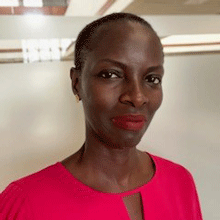
Fatou Fall
https://www.worldbank.org/en/about/people/f/fatou-fall
default alt
Joint Resident Representative of the World Bank Group, Middle East, North Africa, Afghanistan and Pakistan region (MENAAP)
mini-card

Country Office

Korane Faycal

kfaycal@worldbankgroup.org

For project-related issues and complaints contact kfaycal@worldbankgroup.org.